Researcher Betsy Pleasants analyzes Reddit discussions to uncover real-time barriers to abortion access following the Roe v. Wade overturn.
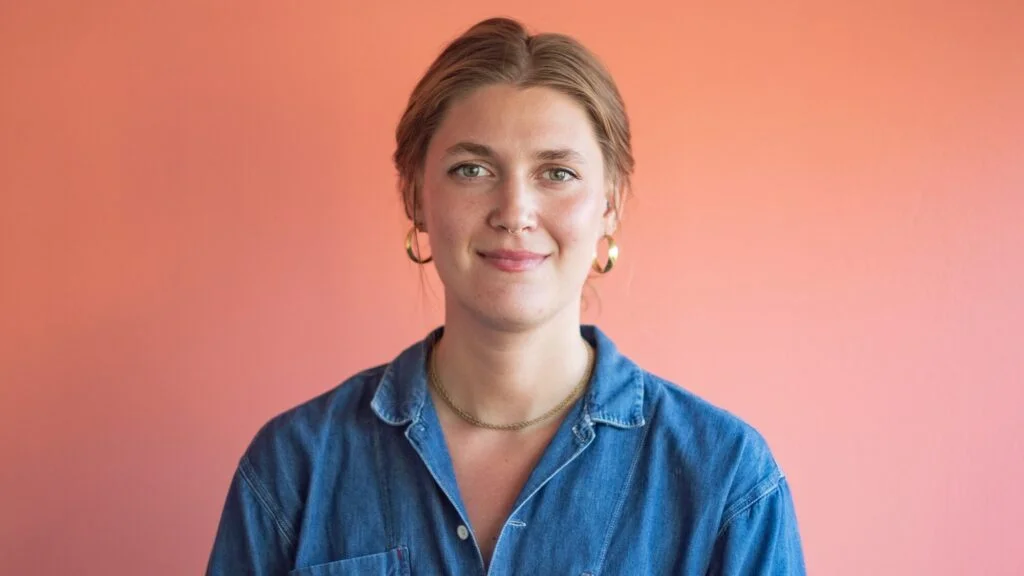
Betsy Pleasants found herself in the eye of the storm, transitioning her research focus from the impacts of the Covid-19 pandemic on abortion services to the seismic shifts brought about by the Supreme Court's decision to overturn Roe v. Wade. This shift, finalized in June 2022, marked a pivotal moment, dismantling nearly five decades of established abortion rights and proliferating state-specific limitations on access.
As a graduate student at UC Berkeley School of Public Health, Pleasants embraced the urgency of the situation, pivoting her dissertation to investigate conversations on Reddit as a means to track evolving barriers to abortion access. The objective was clear: understand how people navigate the complexities of their reproductive health choices in the aftermath of this significant policy change.
“When it became evident that Roe v. Wade was about to be overturned, we knew we had to adapt our approach,” Pleasants stated, now positioned as a postdoctoral research associate at the Center for Women’s Health Research at the University of North Carolina. The decision necessitated a timely response, and the project was uniquely suited to offer insights into how this legal shift impacts individual lives.
Pleasants and her team employed natural language processing (NLP) techniques, combined with qualitative analysis, to sift through thousands of posts on the r/abortion subreddit. This dual-method framework allowed them to identify patterns in real-time discussions while simultaneously capturing the nuances of user experiences. By prioritizing user privacy, they sought to redefine how AI tools could be responsibly utilized for social research.
“We’re navigating a complex policy environment in reproductive health,” Pleasants explained, emphasizing that her research serves as a historical record intended to inform evidence-based policy changes. The findings articulated existing barriers such as exorbitant costs and limited appointment availability while also uncovering lesser-known issues, including delays in receiving abortion medications and the credibility of online ordering services.
Ushma Upadhyay, a professor at the University of California, San Francisco, served as a mentor to Pleasants and lauded her approach. “This represents a pioneering use of NLP to analyze online discussions regarding abortion,” she noted. Traditional research often relies on smaller, manageable samples; within this approach, Pleasants was able to gather a broader and more comprehensive view of the conversation.
For researchers like Pleasants, the utilization of NLP extends beyond merely enhancing the efficiency of studies. It provides a wider lens through which to examine public sentiment and behavior on a scale that would be challenging to achieve through conventional methods.
“Computational research serves as a stepping stool over a tall fence, offering insights into the wider landscape,” remarked Danny Valdez, an associate professor at the Indiana School of Public Health-Bloomington. Valdez, although not directly involved in Pleasants’ work, acknowledged that NLP and AI methodologies offer an expansive overview of how individuals reach out for help, shaping our understanding of potential future policy directions.
A Framework for Understanding Online Discussions
Pleasants’ journey began in North Carolina, where early encounters with access disparities in health education shaped her perspective on reproductive care. Despite the liberal backdrop of Durham, she experienced first-hand the inadequacies of abstinence-only sex education, keenly aware of the uneven distribution of information and services.
“I witnessed peers grappling with insufficient sex education, stigma, and a lack of access to health services,” she reflected. These formative experiences guided her academic path, from earning her undergraduate degree to obtaining her doctorate, ultimately leading her back to UNC for postdoctoral research.
Initially pursuing a career as a physician, Pleasants gravitated toward medical anthropology, compelled by questions about the operational frameworks of health services, particularly concerning women's health. This critical engagement with the healthcare system set the stage for her eventual focus on health service accessibility.
Using Reddit as a research platform enabled Pleasants to capture a wealth of perspectives often missed by conventional analytical methods. The platform's anonymous nature encouraged candid discussions about personal experiences with reproductive health, providing insights from individuals who may avoid interaction with the traditional healthcare system.
“After Roe v. Wade was overturned, many turned to Reddit seeking support,” Upadhyay noted, highlighting the forum's role in facilitating discussions during an era of heightened uncertainty.
The analysis covered over 7,000 posts spanning significant months before and after the Supreme Court’s decision leak, identifying 55 distinct topics. Continuous human oversight complemented the computational analysis, ensuring both validation and a deeper exploration of the qualitative nuances of the conversation.
This research unveiled prevalent barriers—state bans, high costs, and long travel distances—but also spotlighted emerging obstacles like shipment delays for abortion pills, skepticism towards online services, and apprehensions about the legal implications of seeking care. Qualitative analysis enriched understanding, revealing emotional and social ramifications including anxiety, isolation, and instances necessitating self-managed abortions.
The commitment to user privacy was paramount. As the field of reproductive health research intersects with evolving technology, ethical considerations surrounding public data use are critical. “We’re dealing with sensitive, often stigmatized issues that could entail legal risk,” Pleasants articulated, stressing the importance of ethical data handling practices.
To mitigate risks, her team employed a sophisticated adaptation process, disguising user content with composite quotations that blended various posts into secure, non-identifying expressions. They further ensured anonymity through various screening methods, establishing a rigorous model for examining sensitive online discourse on a broader scale.
Pleasants’ current research trajectory has expanded to include including contraception and misinformation, establishing a pressing need for timely insights as policies continuously shift toward greater restrictions. “The significance of research amplifies when faced with increasing policy challenges,” she concluded, indicating a determined resolve to advocate for reproductive healthcare access amid uncertainty.


Discussion
Sign in to join the discussion.