Our editors picked mineral sunscreens for different skin types and tones, including tinted, lightweight formulas that help reduce white cast. Check filters for mineral-only options.
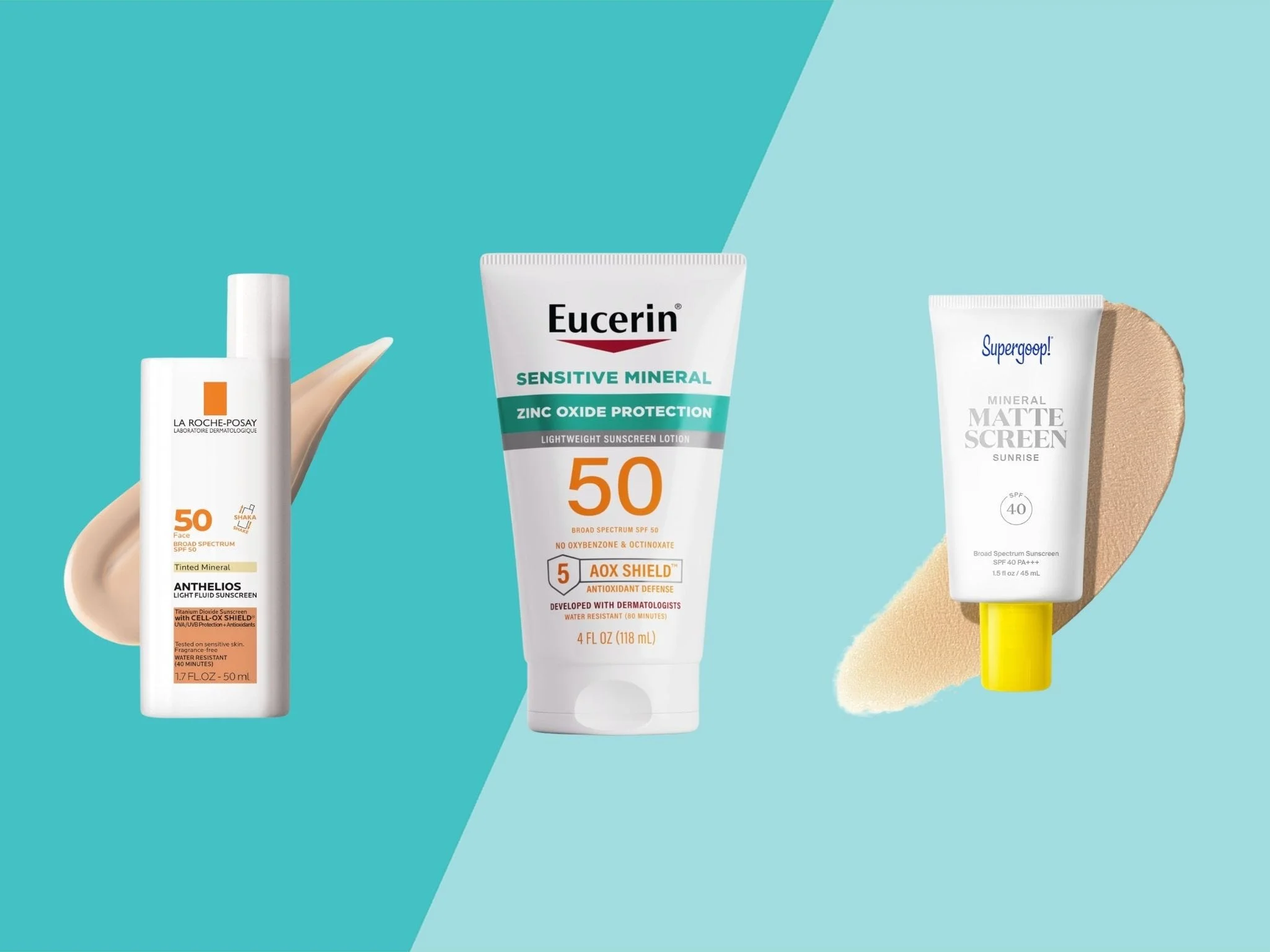
The white cast has been mineral sunscreen’s stubborn drawback. That’s changing: tinted formulas and lighter textures now make it easier to get mineral protection without the lifeguard-pasty finish. The trade-off is that some products marketed alongside mineral options are hybrids, so check the filters if you want a mineral-only formula.
Mineral sunscreens use zinc oxide and titanium dioxide to filter UVA and UVB rays. These ingredients sit on the skin’s surface, which can make them a less irritating choice for people with sensitive skin, says dermatologist Marisa Garshick of Medical Dermatology & Cosmetic Surgery in New York. She describes mineral formulas as less likely to irritate. And the strongest picks do more than block UV: some add ingredients meant to hydrate, soothe, or improve the look of skin while you wear them.
Bemotrizinol has drawn attention after the FDA approved it for use in the U.S. market in June. Still, mineral sunscreens remain a familiar option for shoppers who want zinc oxide or titanium dioxide protection. Brands including La Roche-Posay, Sun Bum, and CeraVe have worked to address the white-cast problem, often with tinted formulas.
Our editors have tested sunscreens across categories, from facial sunscreens and options for oily skin to tinted moisturizers with SPF. For this guide, we paired product testing with dermatologist input and a review of customer feedback to find mineral sunscreens for different skin types and tones.
How we chose these sunscreens
We spoke with Joshua Zeichner, M.D., board-certified dermatologist and director of cosmetic and clinical research in dermatology at Mount Sinai Hospital in New York City; Marisa Garshick, M.D. of Medical Dermatology & Cosmetic Surgery; Angela Casey, M.D., a board-certified dermatologist and skin cancer specialist at Ohio’s Center for Surgical Dermatology; Jennifer David, D.O., founder of Skin & Scripts Virtual Dermatology in Pennsylvania; and Meghan Feely, M.D., a New Jersey and New York City dermatologist and clinical instructor at Mount Sinai.
Our expert sources also included Janiene Luke, M.D. of Loma Linda University’s Faculty Medical Group in California; Brianna Olamiju, M.D.; and Nava Greenfield, M.D., both board-certified dermatologists in New York City. We also considered a wide range of online reviews.
These are the formulas that stood out to our editors. They’re selected for protection, feel, and skin-friendly features—and, where possible, for avoiding that telltale white cast.
We may earn commission from links on this page, but we only recommend products we back. Why Trust Us?
Mineral sunscreens our editors recommend
La Roche-Posay’s Anthelios is a frequent favorite among dermatologists and Prevention editors. Olamiju says it delivers broad-spectrum SPF 50 protection with 100% mineral filters in a fluid, lightweight formula that’s comfortable for daily use. She also points to its suitability for sensitive skin. Editors say it feels hydrating and sits comfortably under makeup; it’s fragrance-free and noncomedogenic, too.
Sun Bum’s mineral lotion makes a practical everyday option, with water resistance for up to 80 minutes. It’s vegan and cruelty-free, fragrance-free, and slightly tinted to soften the white cast. Garshick says its 20% zinc oxide provides broad-spectrum UVA/UVB SPF 50 coverage, while shea butter, cocoa butter, and vitamin E help nourish skin. The fragrance-free formula may also suit sensitive skin.
Supergoop!’s Mattescreen is the mineral counterpart to the brand’s Unseen Sunscreen. Olamiju recommends its broad-spectrum SPF 40 protection for people with oily skin or anyone who wears makeup: the lightweight formula helps manage shine, and its primer-like texture layers well under makeup. Prevention Senior Commerce Editor Charlotte Finigan says it feels so light she can forget she’s wearing it, while leaving skin silky.
CeraVe’s mineral sunscreen pairs sun protection with ceramides, which help skin retain moisture. Feely recommends it, and the oil-free, noncomedogenic formula also contains niacinamide to help soothe redness. That combination makes it a useful face sunscreen. After testing it, I made it my summer daily pick: the finish gives my skin a noticeable glow.
Prefer an untinted CeraVe option? Greenfield recommends the brand’s Invisible Mineral Sunscreen. She says its ceramides, glycerin, and niacinamide add hydration, and that it spreads smoothly without leaving a thick white cast.
Garshick has also recommended a mineral formula made with zinc oxide and titanium dioxide particles too large to penetrate the skin, which she says helps limit irritation. It offers SPF 50 broad-spectrum coverage, and its bottle changes color under UV light as a reminder to reapply. Organic aloe adds a gentle touch, and the formula avoids ingredients that could harm ocean reef life.
EltaMD’s UV Clear Blemish-Prone & Oil Balancing formula needs a closer look: it’s a hybrid sunscreen, combining zinc oxide with the chemical filter octinoxate. That distinction matters if you’re specifically shopping for mineral-only protection. For acne-prone skin, though, the lower amount of zinc oxide may be useful because high concentrations can trap sweat in pores. Greenfield says this version is designed for oilier, breakout-prone skin and differs from the brand’s regular UV Clear formula. It also contains niacinamide, which may buffer irritation, and lactic acid, which hydrates and exfoliates.
Another everyday option has a universal tint that Casey says offers sheer coverage designed to blend across skin tones. Luke recommends it for its hyaluronic acid and antioxidants, which support hydration and add protection from environmental stressors. In my testing, its semi-matte finish worked best during winter. Olamiju also points to its iron oxides and antioxidants, saying they may make it a good fit for people managing melasma or post-inflammatory hyperpigmentation who want protection from UV and visible light.
Eucerin Sensitive Mineral Sunscreen is designed for face and body use. Zeichner describes it as an ultra-lightweight, mineral-only lotion that spreads easily over larger areas and rubs in without a harsh white cast; it’s water-resistant for up to 80 minutes. Olamiju calls it a straightforward, fragrance-free choice for people with easily irritated or sensitive skin.
For a scented option, Dr. Jart’s mineral sunscreen is described as suitable for all skin types, including sensitive skin. Reviewers like its light feel, quick absorption, and matte finish. Garshick says the K-beauty formula combines zinc oxide and titanium dioxide for broad-spectrum coverage, with a lightweight texture that avoids a greasy or heavy finish.
The most useful takeaway from these picks is that a mineral sunscreen’s feel and finish matter as much as its SPF. A formula that stays in your bag and gets used every morning will do more for you than one you avoid because it feels heavy or leaves a cast. SPF 30 is the baseline: choose a sunscreen with an SPF of at least 30.
For a tinted option, Colorescience Sunforgettable Total Protection Face Shield Flex SPF 50 pairs UVA and UVB protection with hydration and a bronzy finish. It went viral in 2026, and Dr. Luke says it blends well with darker skin tones. Niacinamide adds antioxidant support, and the formula also protects against blue light.
That combination makes it a practical shortcut on mornings when a full makeup routine feels like too much. Prevention’s Hannah Jeon says it leaves her skin looking smooth and even, and hasn’t irritated her dry, sensitive skin. The sunscreen is hypoallergenic and non-comedogenic, with no fragrance, parabens, sulfates, phthalates, oil, or dyes.
Choose a formula you’ll want to wear
If you’re concerned about sunscreen settling into fine lines, Dr. Dennis Gross’s lightweight mineral formula is another option. It uses 16% zinc oxide for SPF 30 protection, plus antioxidants, and Dr. Garshick says it’s oil-free, fragrance-free, and layers easily under makeup.
For one bottle that can cover face and body, Badger’s mineral sunscreen offers SPF 30 with zinc oxide, sunflower oil, coconut oil, and vitamin E. It’s fragrance-free and water-resistant, making it a reasonable choice for sensitive skin and outdoor activity. Jeon says it goes on sheer without a white cast. The trade-off: it feels greasy at first, though she finds it moisturizing and lightweight once rubbed in. It provides 40 minutes of water resistance.
Native’s mineral sunscreen is aimed at the whole family. The deodorant brand reformulated it in 2026; its 17% zinc oxide formula is now transparent on skin, according to the fragment. It comes unscented or in Pear & Coconut Water, Tropical Breeze, and Vanilla Milk & Shea. Dr. Garshick says the SPF 30 formula can be used on face and body, feels lightweight, leaves no white cast, and contains hydrating glycerin.
What to check on the label
Start with the active ingredients. Jennifer David, D.O., founder of Skin & Scripts Virtual Dermatology in Pennsylvania, recommends looking for zinc oxide or titanium dioxide. These mineral filters protect against sun damage and skin cancer. Ingredients such as aloe vera or hyaluronic acid can moisturize, but they aren’t the sunscreen filters. If you’re avoiding chemical filters, check for ingredients such as avobenzone, octinoxate, and oxybenzone; some products combine mineral and chemical filters.
White cast remains a real drawback for some mineral sunscreens, particularly for people with darker skin. Dr. David suggests looking for terms such as “technology” or “micro-sized” on the packaging: they can indicate ultra-fine particles that make a formula less opaque while preserving its effectiveness. Tinted formulas can also blend more naturally. Dr. Luke points out that iron oxides in tinted mineral sunscreens may protect against visible light, which can worsen hyperpigmentation and dark spots.
Planning to swim or sweat? Check the water-resistance claim. Mineral sunscreen sits on the skin’s surface and can wash or sweat off if the formula isn’t water-resistant, Dr. Luke says. Either mineral or chemical sunscreen can offer water resistance; the label tells you whether a specific product does. Dr. Zeichner says the stated duration will be up to 40 or 80 minutes. Reapply after swimming or heavy sweating, even when the label lists water resistance.
Mineral and chemical formulas each have trade-offs. Dr. Garshick says people who want to avoid a white cast may prefer chemical sunscreen, though some newer mineral products also blend without one. The practical test is simpler: as Dr. Zeichner puts it, the best sunscreen is the one you’ll actually use.
And don’t assume sunscreen lasts indefinitely. Mineral formulas expire just like chemical ones. Dr. Garshick advises checking the package; Dr. Zeichner says the date is generally three years after production and is printed on the bottle. After that date, the manufacturer can’t guarantee the product’s stability or purity.
Maggie Panos, a longtime digital journalist and hands-on product tester, has spent years finding the right gear for running on elevated paths near home and on her garage treadmill during rainy weather. Her work has appeared in Best Products, Woman’s Day, and other publications.
Charlotte Lewis Finigan is Prevention’s Senior Commerce Editor. Before moving into health and wellness writing, she spent a decade in Hollywood writers’ rooms and contributed pop culture coverage to ETOnline, Bustle, TVGuide, and CBS. She previously covered sexual health and wellness at Refinery29, writing and editing shopping stories about wellness trends, beauty launches, and sex-positive products. She lives in Brooklyn with her girlfriend and their senior dog, Rory.
Prevention may earn commission from links on this page; it recommends products its editors support.



Discussion
Sign in to join the discussion.