Effective hamstring training requires a blend of hip hinges and leg curls to maximize growth across muscle groups, especially the long and short heads.
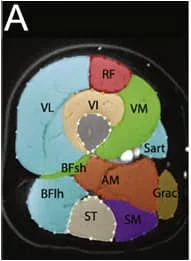
Despite their crucial role in leg movement, hamstrings often take a backseat to the more visually dominant quadriceps during both workouts and research. Lifters tend to focus their efforts on squats, leg presses, and lunges—compound movements that predominantly target the quads. Unless specifically incorporated, hamstring exercises like leg curls and hip hinges frequently fall by the wayside. This pattern not only limits hamstring development but also overlooks potential injury prevention.
Research into hamstring training, while historically less prominent than studies on quadriceps, is gaining traction, particularly among strength and conditioning professionals. The prevalence of hamstring injuries, especially during high-demand sports activities, has spotlighted effective training strategies aimed at mitigating strain risks. This has led to a deeper investigation into exercise selection specifically tailored for hamstrings.
Understanding Hamstring Anatomy
The hamstrings consist of four heads: the long and short heads of the biceps femoris, the semitendinosus, and the semimembranosus. Collectively, these muscles flex the knee, while all but the short head also extend the hip joint. Consequently, effective exercise regimens should encompass both leg curls and hip hinges. It’s important to realize that not all movements targeting the lower body, such as squats and leg presses, significantly contribute to hamstring hypertrophy.
Research Insights on Exercise Effectiveness
Recent studies highlight the shortcomings of traditional lower body exercises for hamstring growth. For example, two studies explored the effectiveness of hip thrusts and barbell squats, finding that neither exercise significantly enhanced hamstring development. Another study compared different squat variations, revealing minimal gains in hamstring size regardless of knee flexion degree. This raises a compelling point: Because the hamstrings are biarticular, they face challenges when engaged in compound movements that require simultaneous hip and knee extension. Instead of focusing on the hamstrings, these movements often recruit other muscles that don’t share this dual role, such as the gluteus maximus and adductor magnus.
To effectively stimulate hamstring development through hip hinges, it’s crucial to minimize knee flexion demands. This insight indicates that while hip-bridging exercises may seem beneficial, maximizing hamstring engagement requires variations where the knee joint remains more static.
Eccentric Training Insights
An intriguing study by Kawama et al. investigated eccentric-focused training and its effects on hamstring muscles. The findings revealed that specific training modalities like the lengthened partial stiff-legged deadlift resulted in substantial growth of the long head and semimembranosus but showed less impact on the short head of the biceps femoris. This suggests that eccentrically focusing on specific hamstring heads can yield varying growth results.
Comparative Studies on Hip Hinge and Leg Curls
Comparative research sheds further light on the distinctions between hip hinges and leg curls. A study conducted by Bourne et al. compared the 45-degree back extension to the Nordic hamstring curl; results showed that the former favored growth in the long head and semimembranosus, while the Nordic version was more effective for developing the short head and semitendinosus. Similar results were observed in a subsequent study by Morin et al., highlighting that the Nordic hamstring curl promoted superior growth of the semitendinosus compared to stiff-legged deadlifts.
Choosing the Right Variation
The findings collectively suggest a significant influence of exercise selection on hamstring training outcomes. Hip hinges demonstrate a propensity for hypertrophy in the long head and semimembranosus, while leg curls, particularly the Nordic variant, cater to the short head and semitendinosus. Meanwhile, the seated leg curl has emerged from research as a particularly effective option for overall hamstring growth while the lying leg curl may offer benefits for the sartorius muscle.
Complementary Training Techniques
Notably, additional studies provide intriguing insights, even though they may not relate strictly to exercise selection. For instance, a study presentation by Maeo et al. observed greater hamstring and glute growth through partial range of motion training focused on lengthened positions, suggesting that exploratory techniques could enhance hamstring workout efficacy. Conversely, another investigation by Cadeo et al. found that the ankle position during lying leg curls had no notable impact on the biceps femoris long head growth—a clarification that underscores individual preference in exercise execution.
In summary, optimizing hamstring development requires integrating both hip hinges and leg curls into training routines. While hip hinges may enhance growth of the long head and semimembranosus, leg curls effectively target the short head and semitendinosus. By selecting the right variations and incorporating both movement types, fitness professionals can create a balanced and effective hamstring training program.
The post Optimizing Hamstring Training: Key Exercises for Enhanced Development appeared first on Stronger by Science.


Discussion
Sign in to join the discussion.